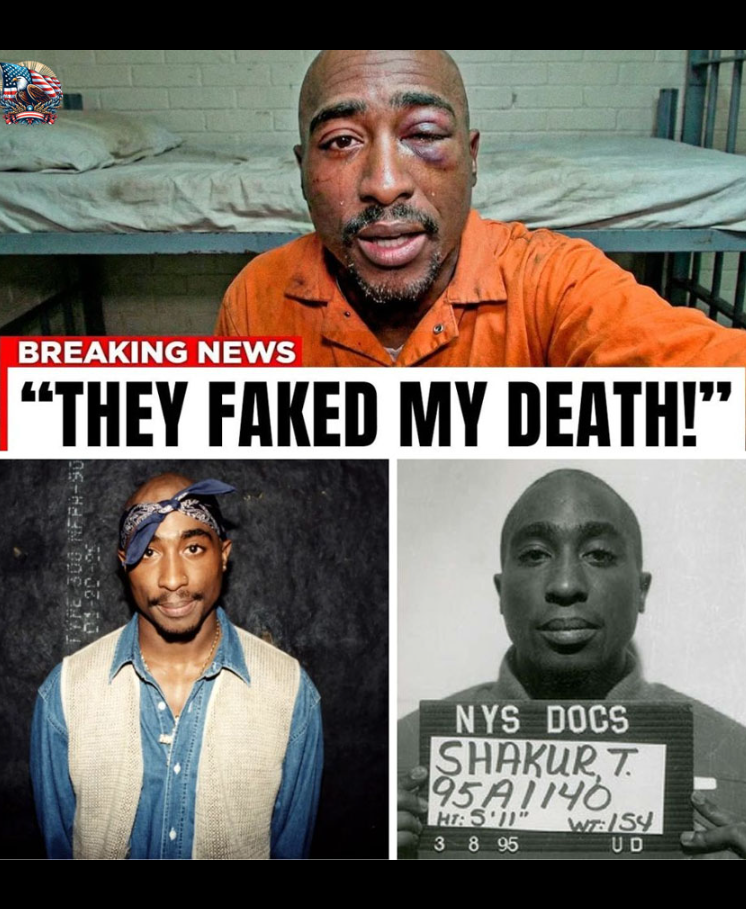
🎬New Footage of Tupac in Jail After His Death Changes Everything
New explosive footage and revelations have shattered decades of conspiracy surrounding Tupac Shakur’s death, exposing the man now jailed for orchestrating the iconic rapper’s 1996 murder. Dwayne Keith “Keefe D” Davis’s arrest and confession mark a seismic breakthrough, finally moving the case from myth to prosecution after 27 years of silence.

The internet frenzy over grainy jail videos claimed to show Tupac alive was false. 𝓿𝒾𝓇𝒶𝓁 clips were misidentified images of Keefe D, a former gang leader awaiting trial for Tupac’s murder. These deceptive videos fueled a global conspiracy storm, but now the real story is emerging from cold case obscurity.
Keefe D’s arrest on September 29, 2023, charged with first-degree murder with gang enhancement, ended decades of law enforcement dead ends, witness silences, and finger-pointing between police departments. After nearly three decades, the elusive question of who killed Tupac now has a prime suspect facing justice.
No dramatic breakthroughs came from new forensics or silent witnesses breaking their code. Instead, Keefe D talked himself into trouble by repeatedly confessing in interviews, documentaries, and his 2019 memoir. His public admissions detailed the murder, dismantling the decades-old enigma with chilling specificity.
Retired LAPD detective Greg Kading uncovered the core narrative: Tupac was killed as gang retaliation following a violent altercation with Orlando Anderson, Keefe D’s nephew, after a heated casino brawl. Security footage barely captured the scuffle that ignited a chain reaction ending in Tupac’s murder.
The 𝒶𝓈𝓈𝒶𝓊𝓁𝓉 on Anderson triggered retribution. Keefe D described obtaining a Glock, spotting Tupac and Suge Knight at a red light, and firing the fatal shots from a white Cadillac. However, conflicting testimonies cloud the shooter’s identity, but the grand jury indicted Keefe D as the mastermind.
Orlando Anderson, the prime suspect who never stood trial, died violently in 1998. The murder weapon vanished, the white Cadillac disappeared, and key witnesses died or remained silent, fueling the case’s cold status. Keefe D’s unwavering confessions changed the equation, creating the prosecution’s only viable path.
Keefe D’s defense claims all confessions were fabricated for profit, denying culpability. This legal maneuver strains credulity given his consistent, detailed accounts across multiple platforms for over a decade. Prosecutors rely heavily on his own words, viewing them as an unrelenting self-incrimination that finally unraveled the mystery.

The prosecution’s file paints a vast web of involvement, implicating high-profile figures and linking East Coast-West Coast rivalries to violent gang politics. 𝒶𝓁𝓁𝑒𝑔𝒶𝓉𝒾𝓸𝓃𝓈 against Sean “Diddy” Combs surfaced, accusing him of orchestrating hits amid hip-hop’s darkest era—a claim Diddy vehemently denies and faces no charges for.
Keefe D’s 2025 jailhouse interview astonishingly reversed prior statements, denying presence in Las Vegas during the shooting, blaming co-authors for embellishments. Despite this shift, the grand jury’s indictment and overwhelming recorded confessions ensure the case moves forward unimpeded, underscoring the trial’s gravity.
The trial, repeatedly delayed due to voluminous evidence, is now set for August 10, 2026, potentially coinciding with the 30th anniversary of Tupac’s death. The courtroom will be the final battleground for truth, where decades of conspiracy, myth, and silence might finally face resolution in a public, legal setting.
Tupac’s life and music reflected relentless conflict and peril. Songs chronicling jail, violence, and survival mirrored his reality, making his murder a cultural scar that fueled endless debate. His death rattled hip-hop and triggered a retaliatory killing of Notorious B.I.G., deepening the tragedy’s national resonance.
This unfolding legal 𝒹𝓇𝒶𝓂𝒶 exposes systemic failures and gang entanglements that hindered justice. Death Row Records’ notorious connections allegedly entrenched in local power structures compounded investigation paralysis. The pyramid of influence provided protection at the top while street-level actors faced lethal risks and law enforcement scrutiny.
With Suge Knight imprisoned for an unrelated murder and alleged accomplices dead, Keefe D stands isolated as the key figure in the case. His trial offers the rare chance to finally hold someone accountable for Tupac’s assassination, ending a harrowing chapter of silence and speculation that has haunted a generation.

Afeni Shakur’s wrongful death suit against Anderson settled before his death, yet she never saw justice served. Now, with Keefe D’s prosecution moving forward, there is hope for long-overdue closure for Tupac’s family and fans worldwide who have awaited answers for decades.
The confusion between the 𝓿𝒾𝓇𝒶𝓁 prison footage of Keefe D and mistaken identity of Tupac epitomizes the desperate search for truth amid tragedy. What was once 𝓿𝒾𝓇𝒶𝓁 misinformation has instead become undeniable evidence of justice catching the man behind the murder for the first time in decades.
Keefe D’s admissions, combined with Kading’s investigation, peel back the layer of myth overshadowing Tupac’s death. This breakthrough forces a reckoning within hip-hop culture and law enforcement, challenging longstanding narratives and offering a path toward historic accountability.
This case symbolizes the complex interplay of music, gang violence, and cultural mythology in 1990s America. As courtroom proceedings loom, the world watches to see whether justice will finally prevail or if the legacy of Tupac’s death will remain buried in shadows.
For fans, family, and the music community, this unprecedented development offers a moment of historic significance. The trial scheduled for 2026 holds the potential to transform decades of heartbreak and speculation into real answers, marking a critical turning point in one of America’s most infamous cold cases.
As Keefe D sits behind bars, captured in footage mistaken for Tupac himself, the irony is palpable. The man many believed escaped death now faces the possibility of lifelong incarceration, embodying a painful closure to an era marked by loss, violence, and unanswered questions.

The journey from 𝓿𝒾𝓇𝒶𝓁 conspiracy theories to courtroom reality illustrates the tireless pursuit of truth amid overwhelming silence and obstruction. This trial will test not only legal arguments but the enduring impact of Tupac’s legacy as the world awaits a final reckoning.
August 2026 is poised to usher in what might be the most definitive chapter yet in the saga of Tupac Shakur’s murder. The once unfathomable quest for justice gains momentum, promising to reshape the narrative that has lingered for nearly 30 years.
The stakes are monumental. This isn’t simply a criminal trial; it’s the potential closure of a cultural wound that has defined hip-hop’s darkest mysteries. For countless fans demanding answers, the court’s verdict will determine how history ultimately remembers Tupac’s tragic end.
The unprecedented legal spotlight now on Keefe D challenges the longstanding codes of silence that have protected many involved. His own voluminous, detailed confessions undermined that silence, ensuring the saga of Tupac’s death transitions from mythic legend to prosecutorial reality.
With decades of anecdotal evidence now crystallized into formal charges, this trial could mark the final act in a story that captured global attention. The clear line drawn by Keefe D’s words may at last pull back the curtain on one of music’s most haunting mysteries.
As anticipation builds, every statement, eyewitness account, and piece of evidence will be scrutinized. The world is watching not just for a verdict, but for the closure and truth long denied to Tupac’s family and millions of devoted fans worldwide.
Justice for Tupac Shakur—a cultural icon whose life was cut tragically short—may finally be within reach. The upcoming trial stands as a pivotal moment, breaking decades of silence and conspiracy, potentially redefining the legacy of an artist whose story was shrouded in shadows for far too long.